Achieving Net Zero: Carbon Footprint & GHG Verification for Indian Industries
- 18 August, 2025
- quvialabsuser
The global call for climate action has placed Net Zero commitments at the center of business strategy. For Indian industries, reducing carbon emissions is no longer just a compliance requirement—it is a critical factor in global competitiveness, investor confidence, and long-term sustainability. As supply chains become increasingly integrated across borders, accurate measurement, reporting, and verification of greenhouse gas (GHG) emissions have become vital.
Understanding Scope 1, 2, and 3 Emissions
The foundation of any Net Zero roadmap is understanding where emissions come from. The Greenhouse Gas Protocol categorizes emissions into three scopes:
- Scope 1: Direct Emissions
Emissions from sources owned or controlled by the company—for example, fuel combustion in boilers, furnaces, or vehicles within a manufacturing plant. - Scope 2: Indirect Emissions (Energy-Related)
Emissions from purchased electricity, heat, or steam. For Indian industries with high energy dependency, transitioning to renewable power sources can significantly reduce Scope 2 emissions. - Scope 3: Value Chain Emissions
The most complex category, covering indirect emissions from upstream and downstream activities such as raw material extraction, logistics, product use, and end-of-life disposal. For many businesses, Scope 3 emissions make up over 70% of the total carbon footprint, requiring collaboration across suppliers and customers.
The Role of ISO 14064 in GHG Verification
Robust verification is essential to build trust and transparency. The ISO 14064 standard provides a globally recognized framework for quantifying, monitoring, and reporting GHG emissions.
- ISO 14064-1: Guides organizations on GHG inventories and carbon footprint assessments.
- ISO 14064-2: Focuses on project-level GHG reductions and carbon credits.
- ISO 14064-3: Provides requirements for independent validation and verification of emissions data.
For Indian industries, achieving ISO 14064 verification through accredited third-party auditors not only ensures credibility but also enables participation in carbon markets, green financing, and global supply chains.
CDP and Global Supply Chain Expectations
The Carbon Disclosure Project (CDP) has become the gold standard for climate-related disclosures. Global buyers and investors increasingly demand CDP-aligned reporting to assess climate risks and supply chain sustainability.
- Suppliers in India that demonstrate transparent reporting of Scope 1–3 emissions gain preferential access to global markets.
- CDP reporting enables benchmarking against peers and helps businesses identify areas of improvement.
- Large Indian corporates with global linkages are already pushing their suppliers to disclose emissions data, making GHG verification a competitive necessity rather than an option.
Pathway for Indian Industries to Achieve Net Zero
- Baseline Assessment – Conduct a carbon footprint study covering Scope 1–3 emissions.
- Set Science-Based Targets – Align reduction goals with the Paris Agreement (1.5°C pathway).
- Implement Mitigation Strategies – Shift to renewable energy, adopt energy-efficient technologies, and improve waste/resource management.
- Verification & Assurance – Use ISO 14064 verification to ensure credibility of reported data.
- Transparent Disclosure – Report emissions performance through CDP and sustainability frameworks to build global trust.
How Quvia Labs Can Help
At Quvia Labs, we partner with industries on their Net Zero journey by offering:
- Carbon Footprint Assessment (Scope 1–3)
- ISO 14064 GHG Verification & Validation
- CDP Disclosure Support & Advisory
- Carbon Market Readiness & Strategy
With our expertise in environmental consulting, audits, and sustainability services, we help Indian businesses transform climate commitments into measurable action, ensuring compliance and competitiveness in global supply chains.
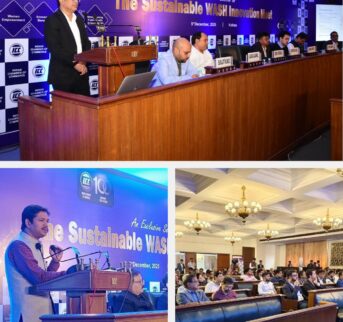
Quvia Labs Represents India’s Sustainability Vision at the Sustainable WASH Innovation Meet
- 22 December, 2025
- quvialabsuser
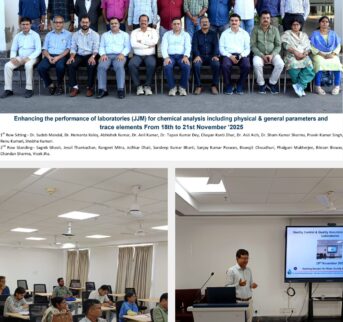
Quvia Labs Contributes to National Capacity Building Under Jal Jeevan Mission (JJM)
- 23 November, 2025
- quvialabsuser

Strategic Collaboration between ND International & Quvia Labs Pvt. Ltd
- 17 May, 2025
- quvialabsuser
COP 27: CLIMATE CHANGE AND SUSTAINABILITY
- 25 November, 2022
- quvialabsuser
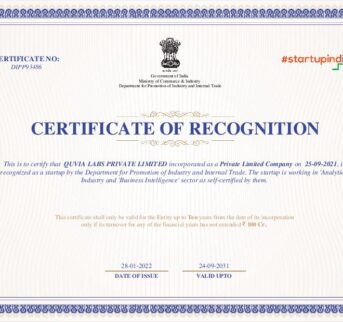
Quvia Labs received Startup India Recognition
- 29 January, 2022
- quvialabsuser
