Sustainability Reporting in India: From BRSR to GRI – What Companies Must Know in 2025
- 18 August, 2025
- quvialabsuser
Sustainability is no longer a voluntary initiative but a regulatory and market expectation. In 2025, Indian businesses face growing scrutiny from regulators, investors, and global stakeholders on how they disclose their environmental, social, and governance (ESG) performance. With the mandatory Business Responsibility and Sustainability Report (BRSR) for the top 1,000 listed companies by market capitalization, and the rising influence of global frameworks such as the Global Reporting Initiative (GRI) and the Sustainability Accounting Standards Board (SASB), organizations must embrace a structured and strategic approach to sustainability reporting. At Quvia Labs, we guide businesses through this complex reporting landscape, ensuring not only compliance but also the creation of value-driven sustainability narratives.
The BRSR, mandated by SEBI, is a compliance-focused framework designed to standardize ESG disclosures for Indian companies. It covers nine principles aligned with the National Guidelines on Responsible Business Conduct (NGRBC), addressing areas such as governance, environmental stewardship, and social responsibility, and has been mandatory for the top 1,000 listed entities since FY 2022–23. In contrast, the GRI is a globally recognized standard that emphasizes stakeholder-centric transparency across issues such as environmental impact, labor practices, supply chain accountability, and human rights. This makes it particularly relevant for Indian companies engaged in global trade and export markets. Meanwhile, the SASB framework offers industry-specific metrics with a strong investor focus, enabling companies to communicate ESG performance in financial terms. Increasingly, organizations adopt a hybrid approach—leveraging BRSR for regulatory compliance, GRI for global stakeholder engagement, and SASB for investor communication.
Investors are demanding greater sustainability disclosures for several reasons. First, ESG integration into risk management allows them to evaluate regulatory, reputational, and operational risks more effectively, making compliance with BRSR and alignment with GRI/SASB essential. Second, transparent reporting is now a prerequisite for accessing global capital markets, with robust disclosures often linked to better valuations, lower cost of capital, and enhanced investor confidence. Third, multinational corporations and institutional investors expect companies in their supply chains to align with international reporting standards, which is particularly critical for Indian exporters in sectors like textiles, pharma, IT, and energy. Finally, with India committing to a net-zero target by 2070, investors are closely monitoring how companies articulate their decarbonization roadmaps, climate transition strategies, and opportunities for green growth.
Looking ahead, 2025 marks a turning point for Indian corporates in sustainability reporting. Mandatory BRSR compliance should be seen as the baseline, with companies expected to integrate ESG principles into business strategy rather than treat reporting as a standalone task. Many leading firms are adopting a hybrid reporting model that combines BRSR with GRI and SASB to meet both local and global expectations. At the same time, digital transformation is reshaping the reporting process, with advanced tools, AI-driven ESG data management systems, and blockchain-enabled traceability enhancing accuracy and transparency. Moreover, stakeholders now expect not only disclosures but also independent third-party assurance of ESG data, making credibility a central component of reporting.
At Quvia Labs, we support businesses at every stage of this journey. Our expertise covers BRSR preparation and gap analysis, GRI and SASB-aligned reporting, ESG strategy and roadmap development, third-party data assurance, and stakeholder engagement through robust materiality assessments. By bridging compliance with international best practices, we enable companies to build trust, attract capital, and create long-term value through their sustainability disclosures.
Ultimately, sustainability reporting in India is not about choosing between BRSR, GRI, or SASB, but about understanding how these frameworks complement one another. BRSR secures regulatory compliance, GRI strengthens global credibility, and SASB enhances financial relevance for investors. Companies that integrate these frameworks strategically will be better positioned to thrive in a rapidly evolving ESG landscape. At Quvia Labs, we partner with organizations to transform reporting obligations into opportunities for growth, innovation, and competitive advantage.
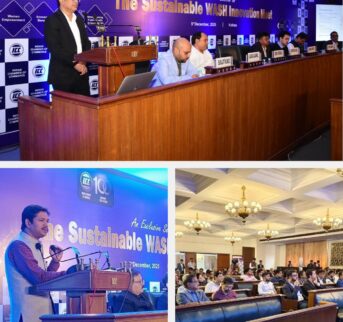
Quvia Labs Represents India’s Sustainability Vision at the Sustainable WASH Innovation Meet
- 22 December, 2025
- quvialabsuser
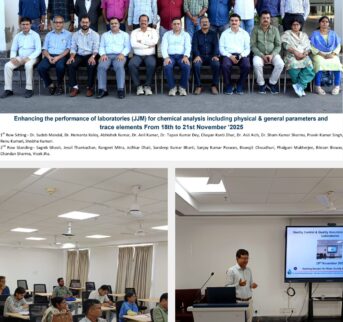
Quvia Labs Contributes to National Capacity Building Under Jal Jeevan Mission (JJM)
- 23 November, 2025
- quvialabsuser

Strategic Collaboration between ND International & Quvia Labs Pvt. Ltd
- 17 May, 2025
- quvialabsuser
COP 27: CLIMATE CHANGE AND SUSTAINABILITY
- 25 November, 2022
- quvialabsuser
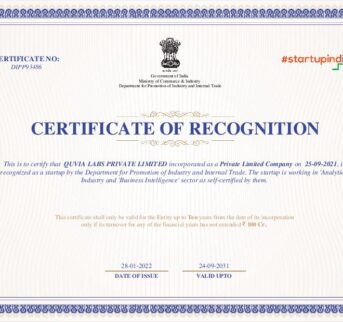
Quvia Labs received Startup India Recognition
- 29 January, 2022
- quvialabsuser
